





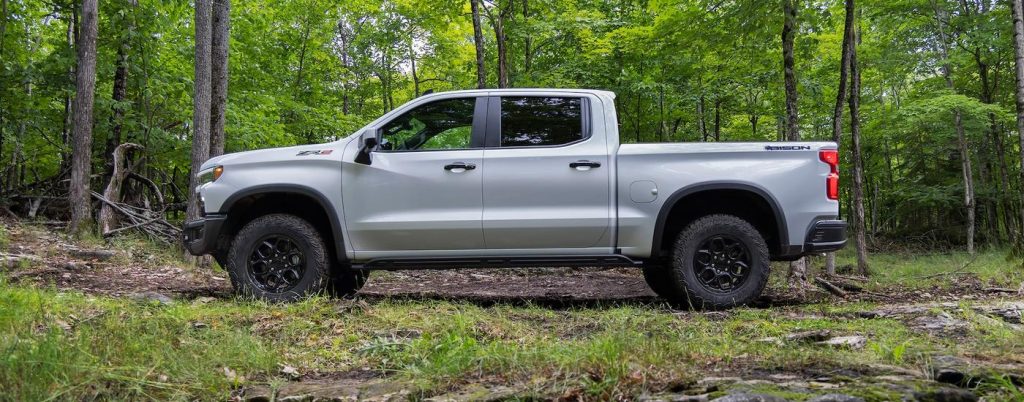
While there are some distinct advantages to shopping on the pre-owned market, customization isn’t usually one of them. Used vehicles can represent a real bargain, allowing you to enjoy models, trims, and features that might otherwise be outside of your budget, but if you want to build a bespoke ride, you might have to take matters into your own hands.
Say you’re on the hunt for a used Chevy Silverado for sale. Our inventory of pre-owned models might be a great starting point, but if you’re looking to create a one-of-a-kind pickup, you might have to supplement your used Silverado with a few aftermarket upgrades. From LED light bars and towing hitch receivers to tonneau covers, winches, and bed liners, aftermarket parts and accessories can transform a run-of-the-mill used pickup into your dream ride.
While these components can go a long way toward improving a truck’s functionality and style, lift kits and upsized tires represent two of the most popular aftermarket upgrades for a Chevy Silverado. So, why are these enhancements so important, what are some of the potential downsides, and how much of an investment are they? We’ll explore all that and more as we take a quick look at some tire- and lift-related upgrades…
Lifts
Lift kits come in two distinct flavors: body lifts and suspension lifts. While they might sound similar, body and suspension lift kits employ a totally different approach when it comes to adding height. These differences are more than cosmetic, which is why it’s so important to know what you’re getting into before you take the plunge. Let’s compare and contrast body and suspension lift kits and finish up with a quick look at a third option in leveling kits…
Body Lift Kits
- Cost: $100 to $750 (plus $200 to $600 for professional installation)
- Time: 2 to 7 hours
- Difficulty: Low
- Maximum Lift: 5 inches
We’ll start with body lift kits, which represent the less expensive and drastic of the two systems. True to its name, a body lift kit simply elevates the body of the truck away from the frame by installing spacers or blocks between the two. These spacers or blocks can be made of plastic, metal, or urethane, but all have the same effect: lifting the body of the truck while keeping the frame at the factory height. Once the spacer or blocks are installed, the body and frame are rejoined with longer bolts in a process that typically adds between two to five inches of ride height.
This added height doesn’t have an impact on a pickup’s overall ground clearance, so why bother with a body lift kit? For most drivers, it comes down to a matter of increased visibility and the ability to accommodate larger tires—and then there’s handling. While a suspension lift kit can have a big impact on ground clearance and off-road capability, it can present some real downsides in handling; a suspension lift kit will increase a vehicle’s body roll, which can not only cause oversteer or understeer but can also make for an uncomfortable ride.
Body lift kits don’t present the same sort of body roll issues and also have less of an impact on a truck’s center of gravity. A three-inch body lift will only increase a vehicle’s center of gravity by 0.6 inches, whereas a three-inch suspension lift translates to a three-inch increase. A higher center of gravity can present some real issues regarding stability and rollover potential, which is another reason why it’s vital to choose wisely when weighing your lifting options.
Suspension Lift Kits
- Cost: $300 to $2,000 (plus $400 to $2,500 for professional installation)
- Time: 10 to 15 hours
- Difficulty: High
- Maximum Lift: 12 inches
If your goal is to maximize ground clearance, a suspension lift kit is the way to go. While suspension lift kits are a good deal more complex than their body lift counterparts, there’s no substitute for the advantages they can provide when it comes to improving a truck’s off-road capability.
A suspension lift kit increases ride height and ground clearance by adding lengthier suspension components to the mix. These longer shocks and springs lift both the frame and the body of the truck, which confers a number of advantages to ensuring off-road success. A suspension lift kit not only allows for the installation of larger wheels and tires but also maximizes visibility and ride comfort while allowing for easier access to underbody components.
That said, suspension lift kits can be a real project. Not only are they significantly more expensive than body lift kits, but they also often require drivers to simultaneously upgrade a number of related components like the driveshaft, brake lines, and exhaust. As we mentioned above, a suspension lift kit can also have a noticeable impact on handling and safety with increases to both a vehicle’s body roll and center of gravity. While these might be deal-breakers for some drivers, others will see them as a small price to pay for the ability to add as much as a foot to a truck’s ground clearance.
Leveling Kits
We should also take a moment to mention leveling kits, which represent a more affordable alternative to the standard suspension and body, with an average price of around $250. Of course, this affordability does come with its downsides.
While body and suspension lift kits can increase a vehicle’s overall height, leveling kits are a little more limited. Like a suspension lift kit, leveling kits do improve ground clearance and allow for upsized tires, but as the name implies, they’re only really intended to level the height between a truck’s front and rear end. Leveling kits are typically limited to two inches of lift or less, making them a slightly less practical—if cheaper—substitute for a body or suspension lift kit.

Tires
Throwing a new set of tires on your pre-owned Chevy Silverado is one of the easiest upgrades in the book. Whether you’re looking to make a switch for performance- or style-related surprises, there are a few things to keep in mind when shopping for a new set of tires for your Chevy Silverado. From tire size and type to the long-running debate between up-sizing and plus-sizing, we’ll examine a few factors you’ll need to consider when swapping out the tires on your Chevy Silverado.
Tire Size
The first and most obvious factor when choosing a new set of tires is to make sure they’re going to fit. Most drivers are familiar with the recommended factory tire size, which can be found stamped into a tire’s sidewall, displayed in the owner’s manual, or displayed on the door jamb sticker along with correct inflation, tow rating, and other relevant information.
A typical tire size might read something like P 255/70R17—but what does that jumble of letters and words mean?
We’ll start with the letter P, which is short for passenger. Most of today’s cars, trucks, and SUVs come with P-rated tires, which, while grippy and comfortable, don’t hold up so well in off-road scenarios. If you need a more rugged sort of rubber, you might consider switching the factory P tires for a Light Truck (LT) set, which offers some real benefits when it comes to stiffness, weight capacity, and off-road performance.
As far as the rest of the tire size code goes, the number 255 refers to the tire’s width in millimeters, while 70 indicates the aspect ratio of the tire’s sidewall. R points to radial construction while the number 17 indicates the diameter of the wheel the tire should be affixed to. When choosing new tires, drivers need to make sure they match the recommended size unless they’re also performing a body or suspension lift that will allow for a larger set.
Tire Type
Drivers have three choices when it comes to aftermarket tires. All-terrain (A/T) tires are the most popular and versatile choice, offering well-rounded performance for both on- and off-road driving. Want to use your Chevy Silverado as both a daily driver and a weekend adventure rig? All-terrain tires are probably the way to go.
If you’re trying to build a dedicated off-road rig, mud-terrain (M/T) tires should be a good fit. These tires put an emphasis on traction, which can come in handy when you’re navigating dirt, mud, gravel, and sand. Mud-terrain tires are built with a more aggressive tread pattern than all-terrain tires, allowing them to offer superior grip no matter what the trail might throw at you.
Finally, there are highway terrain (H/T) tires. If you’re the type of driver who rarely finds themself wandering off the beaten path, H/T tires are a solid choice. Featuring the least aggressive tread pattern of the three options mentioned here, H/T tires emphasize efficiency and ride comfort above all else.
Plus-Sizing vs Up-Sizing
The ability to install a new set of larger tires is one of the major advantages of performing a suspension or body lift. The added ride height allows drivers to up-size their tires, allowing their truck to ride on bigger tires than it could otherwise accommodate.
While larger tires offer some substantial benefits for traction and increased ride height, there are also some disadvantages to the practice. Up-sizing can reduce fuel economy and cause certain powertrain and brake components to wear out at an accelerated rate. Larger tires often require a vehicle’s speedometer to be reprogrammed, as the larger diameter can lead to an inaccurate reading.
If you’re looking to change the appearance of your tires and wheels without performing a suspension or body lift, consider a little plus-sizing. This practice involves installing larger-diameter wheels coupled with lower-profile tires, which can dramatically alter the appearance of your ride without actually requiring increased clearance. Plus-sizing doesn’t provide the same off-road benefits as up-sizing, and while it improves cornering and handling, it’s most often performed as a pure appearance upgrade.

In the Market for Mods?
The Chevy Silverado is already one of the most rugged, capable, and reliable full-size pickups on the market, so why bother with upgrades? It all comes down to customization. With the Silverado series, Chevy has provided drivers with a blank canvas that presents the perfect starting point to create the pickup of your dreams.
Are you looking for a little extra visibility without breaking the bank? A body lift kit is one affordable option. If off-road success is a priority, a suspension lift kit can go a long way toward helping you achieve your goals, improving ground clearance while allowing you to install larger, grippier tires. Up-sizing your tires can have a similar effect, while plus-sizing will lend your Silverado a stylish new look. Activity-specific mud-terrain or highway-terrain tires can improve off-road performance or efficiency and ride comfort, while a leveling kit can improve ground clearance at a fraction of the cost of a pricey suspension lift.
It’s hard to improve on the time-tested Silverado formula, but a few mods can make all the difference in crafting your one-of-a-kind pickup.
Connect with us


- June 2026
- May 2026
- April 2026
- March 2026
- February 2026
- January 2026
- December 2025
- November 2025
- October 2025
- September 2025
- August 2025
- July 2025
- June 2025
- May 2025
- April 2025
- March 2025
- February 2025
- January 2025
- December 2024
- November 2024
- October 2024
- September 2024
- August 2024
- July 2024
- June 2024
- May 2024
- April 2024
- March 2024
- February 2024
- January 2024
- December 2023
- November 2023
- October 2023
- September 2023
- August 2023
- July 2023
- June 2023
- May 2023
- April 2023
- March 2023
- February 2023
- January 2023
- December 2022
- November 2022
- October 2022
- September 2022
- August 2022
- July 2022
- June 2022
- May 2022
- April 2022
- March 2022
- February 2022
- January 2022
- December 2021
Archives
- 2024 Chevy Blazer
- 2024 Chevy Equinox EV
- 2024 Chevy Suburban
- 2024 Silverado EV vs 2024 Ford F-150 Lightning
- 2025 Chevy Blazer
- 2025 Chevy Blazer EV
- 2025 Chevy Colorado
- 2025 Chevy Colorado vs 2025 Ford Ranger
- 2025 Chevy Equinox
- 2025 Chevy Equinox EV
- 2025 Chevy Silverado 1500
- 2025 Chevy Silverado 2500 HD
- 2025 Chevy Silverado 3500 HD
- 2025 Chevy Suburban
- 2025 Chevy Tahoe
- 2025 Chevy Trailblazer
- 2025 Chevy Traverse
- 2025 Chevy Traverse vs 2025 GMC Acadia
- 2025 Chevy Trax
- 2026 Chevy Colorado
- 2026 Chevy Colorado vs 2026 GMC Canyon
- 2026 Chevy Equinox
- 2026 Chevy Silverado 1500
- 2026 Chevy Silverado 1500 vs 2026 GMC Sierra 1500
- 2026 Chevy Silverado 1500 vs 2026 Ram 1500
- 2026 Chevy Silverado 2500 HD
- 2026 Chevy Tahoe
- 2026 Chevy Trax
- 2027 Chevy Bolt
- Bigfoot Chevy Dealership
- Blazer EV for Sale
- Blazer EV for Sale Near San Antonio
- Boerne Chevy Dealer
- Braun's Farm Chevy Dealership
- Budget Cars for Sale
- Castroville Chevy Dealership
- Certified Pre-Owned Chevy Dealer
- Chevrolet Camaro Dealer
- Chevrolet Dealership San Antonio
- Chevy Blazer for Sale
- Chevy Bolt for Sale
- Chevy Colorado for Sale
- Chevy Colorado for Sale In Castroville
- Chevy Colorado for Sale Near Helotes
- Chevy Colorado for Sale Near Hondo
- Chevy Colorado for Sale Near Lakehills
- Chevy Colorado for Sale Near San Antonio
- Chevy Dealer
- Chevy Dealer Near Converse
- Chevy Dealer Near Lakehills
- Chevy Dealer Near Me
- Chevy Dealer Near Pearsall
- Chevy Dealer Near San Antonio
- Chevy Dealer Serving Uvalde
- Chevy Equinox EV Dealer
- Chevy Equinox EV for Sale
- Chevy Equinox EV for Sale Near Castroville
- Chevy Equinox EV for Sale Near San Antonio
- Chevy Equinox for Sale
- Chevy Equinox for Sale Near San Antonio
- Chevy Equinox for Sale Near Uvalde
- Chevy EV Dealer
- Chevy Fleet Vehicles for Sale
- Chevy Malibu for Sale
- Chevy Silverado 1500 Dealer
- Chevy Silverado 1500 for Sale
- Chevy Silverado 1500 for Sale in Castroville
- Chevy Silverado 1500 for Sale Near Fair Oaks Ranch
- Chevy Silverado 1500 for Sale Near Helotes
- Chevy Silverado 1500 for Sale Near Hondo
- Chevy Silverado 1500 for Sale Near San Antonio
- Chevy Silverado 1500 for Sale Near Uvalde
- Chevy Silverado 2500 for Sale Near San Antonio
- Chevy Silverado EV for Sale in Castroville
- Chevy Suburban for Sale
- Chevy Suburban for Sale Near San Antonio
- Chevy Suburban for Sale Near Uvalde
- Chevy SUVs for Sale
- Chevy Tahoe for Sale Near Hondo
- Chevy Tahoe for Sale Near Lakehills
- Chevy Tahoe for Sale Near San Antonio
- Chevy Trailblazer for Sale
- Chevy Trailblazer for Sale Near San Antonio
- Chevy Traverse for Sale
- Chevy Traverse for Sale in Castroville
- Chevy Traverse for Sale Near Helotes
- Chevy Traverse for Sale Near Lakehills
- Chevy Traverse for Sale Near Leon Valley
- Chevy Traverse for Sale Near San Antonio
- Chevy Trax for Sale
- Chevy Trax for Sale in Castroville
- Chevy Trax for Sale Near San Antonio
- Chevy Trucks for Sale
- Chevy Trucks for Sale Near Hondo
- Chevy Trucks for Sale Near Lakehills
- Devine Chevy Dealer
- Electric Vehicles for Sale
- GM Purchase Programs
- Helotes Chevy Dealer
- Hondo Chevrolet Dealer
- Hondo Chevy Dealer
- Leon Valley Chevy Dealership
- Moore Chevy Dealer
- Oak Grove Chevrolet Dealer
- Oil Change
- Oil Change Near Me
- San Antonio Chevrolet Dealer
- San Antonio Chevy Commercial Truck Dealer
- San Antonio Chevy Dealer
- San Antonio Chevy Suburban Dealer
- San Antonio Used Car Dealerships
- San Antonio Used Chevy Dealer
- Sell My Car
- Silverado 2500 for Sale
- Silverado EV for Sale
- Silverado EV for Sale Near San Antonio
- SUVs for Sale
- SUVs for Sale in Castroville
- SUVs for Sale in San Antonio
- SUVs for Sale Near Hondo
- Tahoe for Sale
- Texas Chevy Dealer
- Truck Dealer Near Me
- Trucks for Sale
- Used Car Dealer Near Me
- Used Cars for Sale
- Used Chevy Dealer
- Used Chevy Silverado for Sale
- Used Chevy Silverado for Sale Near San Antonio
- Used Chevy Trucks Near Me
- Used SUVs for Sale
- Used Truck Dealer Near San Antonio
- Used Truck Dealership
- Used Trucks for Sale
- Used Trucks for Sale in Castroville, TX
- Used Trucks for Sale Near San Antonio
- Work Trucks for Sale