





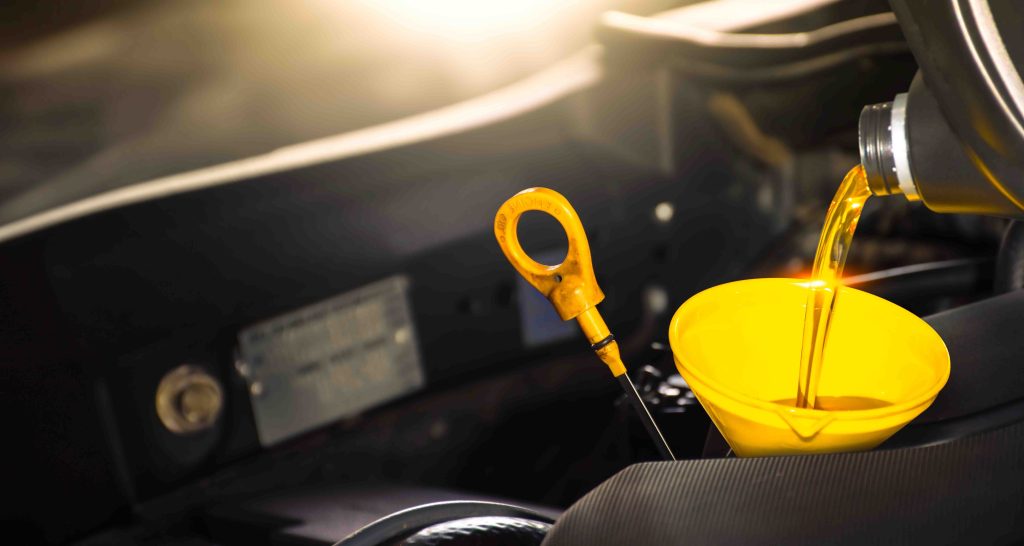
Why is a routine oil change essential? Oil is the liquid gold your vehicle needs to run its best and most efficiently. However, many drivers don’t think twice about the oil and what it does behind the scenes. Why would you? It’s easy to climb in the driver’s seat, start the ignition, and set off for your destination without a second thought. You expect the engine to perform optimally and rely on your vehicle’s technologies, monitoring systems, and features to alert you to any trouble, like the oil life indicator or an alert on the digital driver dashboard. When you see these alerts, you know it’s time for an oil change, but what does that service involve, and why is it critical to your vehicle’s longevity?
Why Oil Changes Matter: A Service You Shouldn’t Skip
Your vehicle’s engine relies on many moving parts, like pistons and valves, to generate enough energy to propel your vehicle. As these parts move, they create heat or friction, which can be detrimental to your engine and cause it to overheat. Moreover, the constant movement of those parts leads to excessive wear and tear, reducing the life of your engine and limiting its ability to run efficiently and optimally.
Oil solves these issues by lubricating, cleaning, and cooling the engine’s many moving components. As a lubricant, the oil allows the parts to seamlessly work together, enhancing the engine’s efficiency and improving your vehicle’s gas mileage. In turn, you save money on fuel because your engine isn’t working harder than necessary to run optimally.
As the oil lubricates, it also mitigates excessive heat or friction caused by the parts working together. The oil cools the engine components and actively prevents the engine from overheating by ensuring the conditions are ideal. Simultaneously, the oil picks up dirt and debris that can damage the engine and lead to corrosion. Over time, the accumulated debris turns the oil into sludge, which is less effective. Because of this, routine oil changes are essential to ensuring your engine has the high-quality oil necessary to perform its best mile after mile.
What Happens During an Oil Change?
Oil changes are considered routine maintenance and can be tackled from the comfort of your garage or the convenience of our service center. The process is straightforward, with our technicians offering additional services during every routine oil change to ensure your vehicle has everything it needs. We’ll discuss those services below, but first, let’s cover what a typical oil change involves.

The Basics: Out With the Old and In With the New Oil
Changing the oil in your vehicle isn’t a difficult task. Essentially, you’re replacing the old oil with new oil and adding a new filter based on the manufacturer’s recommendations outlined in the vehicle’s owner’s manual. Whether you tackle an oil change at home or rely on our technicians to handle the job, the process is the same and starts with getting the correct type of oil and filter for your vehicle.
Once you know the type of oil and how much you need, it’s time to lift the vehicle using a jack. This position makes accessing the oil pan and filter easier as you place an oil receptacle below the reservoir to catch the old oil as it drains. After the oil drains, remove the old oil filter, replace the drain plug, and lightly coat the new filter and its rubber gasket with oil before replacing it. With the filter and plug tightened by hand, it’s time to lower your vehicle and open the hood to add new oil to the reservoir.
With the reservoir filled with new oil, the final steps are essential to a successful oil change. It’s critical to check the oil level after running the engine for a few seconds, which allows the oil to circulate. Using the dipstick, you can confirm the oil level is correct. Finally, check for leaks under your vehicle after letting the engine idle for a few minutes.
Why Trust Our Team with Your Next Oil Change?
Oil changes are straightforward enough that many customers tackle the service at home in their garage. We are happy to support our DIY customers, with our parts department offering genuine OEM oil filters for your vehicle. However, there are several other perks to trusting our technicians with every routine oil change.
While oil changes are simple, the process takes time as you determine the correct type of oil and filter your vehicle needs, purchase the items, and gather the tools needed to handle the job. Alternatively, our state-of-the-art service center has the latest tools and technologies, genuine OEM parts, and a team of talented technicians ready to handle anything your vehicle needs. Because of this, routine oil changes are incredibly efficient and include several additional services that guarantee you get more for your time and money. Plus, when you get your oil changed with us, you won’t have to worry about properly disposing of the old oil; we take care of it for you.
Every routine oil change includes a multi-point inspection and tire rotation. Rotating the tires is essential to extending their longevity because it promotes even tread wear. This service also gives our technicians the chance to inspect each tire for signs of damage or potential hazards. This assessment is part of our multi-point inspection, where our technicians evaluate your vehicle’s major components to determine their condition and report their findings.

Treat Your Vehicle to the Very Best
Your vehicle is an investment, regardless of how much you paid or whether you bought it new or used. Routine oil changes are essential to maintaining and protecting that investment by giving your vehicle the high-quality oil it needs to keep the engine lubricated, cleaned, and cooled. When you trust a team like ours with this routine service, you and your vehicle are guaranteed top-notch service that sets you up for success on the road every mile ahead.
Connect with us


- July 2026
- June 2026
- May 2026
- April 2026
- March 2026
- February 2026
- January 2026
- December 2025
- November 2025
- October 2025
- September 2025
- August 2025
- July 2025
- June 2025
- May 2025
- April 2025
- March 2025
- February 2025
- January 2025
- December 2024
- November 2024
- October 2024
- September 2024
- August 2024
- July 2024
- June 2024
- May 2024
- April 2024
- March 2024
- February 2024
- January 2024
- December 2023
- November 2023
- October 2023
- September 2023
- August 2023
- July 2023
- June 2023
- May 2023
- April 2023
- March 2023
- February 2023
- January 2023
- December 2022
- November 2022
- October 2022
- September 2022
- August 2022
- July 2022
- June 2022
- May 2022
- April 2022
- March 2022
- February 2022
- January 2022
- December 2021
Archives
- 2024 Chevy Blazer
- 2024 Chevy Equinox EV
- 2024 Chevy Suburban
- 2024 Silverado EV vs 2024 Ford F-150 Lightning
- 2025 Chevy Blazer
- 2025 Chevy Blazer EV
- 2025 Chevy Colorado
- 2025 Chevy Colorado vs 2025 Ford Ranger
- 2025 Chevy Equinox
- 2025 Chevy Equinox EV
- 2025 Chevy Silverado 1500
- 2025 Chevy Silverado 2500 HD
- 2025 Chevy Silverado 3500 HD
- 2025 Chevy Suburban
- 2025 Chevy Tahoe
- 2025 Chevy Trailblazer
- 2025 Chevy Traverse
- 2025 Chevy Traverse vs 2025 GMC Acadia
- 2025 Chevy Trax
- 2026 Chevy Colorado
- 2026 Chevy Colorado vs 2026 GMC Canyon
- 2026 Chevy Equinox
- 2026 Chevy Silverado 1500
- 2026 Chevy Silverado 1500 vs 2026 GMC Sierra 1500
- 2026 Chevy Silverado 1500 vs 2026 Ram 1500
- 2026 Chevy Silverado 2500 HD
- 2026 Chevy Tahoe
- 2026 Chevy Trax
- 2027 Chevy Bolt
- 2027 Chevy Silverado 1500
- Bigfoot Chevy Dealership
- Blazer EV for Sale
- Blazer EV for Sale Near San Antonio
- Boerne Chevy Dealer
- Braun's Farm Chevy Dealership
- Budget Cars for Sale
- Castroville Chevy Dealership
- Certified Pre-Owned Chevy Dealer
- Chevrolet Camaro Dealer
- Chevrolet Dealership San Antonio
- Chevy Blazer for Sale
- Chevy Bolt for Sale
- Chevy Colorado for Sale
- Chevy Colorado for Sale In Castroville
- Chevy Colorado for Sale Near Helotes
- Chevy Colorado for Sale Near Hondo
- Chevy Colorado for Sale Near Lakehills
- Chevy Colorado for Sale Near San Antonio
- Chevy Dealer
- Chevy Dealer Near Converse
- Chevy Dealer Near Lakehills
- Chevy Dealer Near Me
- Chevy Dealer Near Pearsall
- Chevy Dealer Near San Antonio
- Chevy Dealer Serving Uvalde
- Chevy Equinox EV Dealer
- Chevy Equinox EV for Sale
- Chevy Equinox EV for Sale Near Castroville
- Chevy Equinox EV for Sale Near San Antonio
- Chevy Equinox for Sale
- Chevy Equinox for Sale Near San Antonio
- Chevy Equinox for Sale Near Uvalde
- Chevy EV Dealer
- Chevy Fleet Vehicles for Sale
- Chevy Malibu for Sale
- Chevy Silverado 1500 Dealer
- Chevy Silverado 1500 for Sale
- Chevy Silverado 1500 for Sale in Castroville
- Chevy Silverado 1500 for Sale Near Fair Oaks Ranch
- Chevy Silverado 1500 for Sale Near Helotes
- Chevy Silverado 1500 for Sale Near Hondo
- Chevy Silverado 1500 for Sale Near San Antonio
- Chevy Silverado 1500 for Sale Near Uvalde
- Chevy Silverado 2500 for Sale Near San Antonio
- Chevy Silverado EV for Sale in Castroville
- Chevy Suburban for Sale
- Chevy Suburban for Sale Near San Antonio
- Chevy Suburban for Sale Near Uvalde
- Chevy SUVs for Sale
- Chevy Tahoe for Sale Near Hondo
- Chevy Tahoe for Sale Near Lakehills
- Chevy Tahoe for Sale Near San Antonio
- Chevy Trailblazer for Sale
- Chevy Trailblazer for Sale Near San Antonio
- Chevy Traverse for Sale
- Chevy Traverse for Sale in Castroville
- Chevy Traverse for Sale Near Helotes
- Chevy Traverse for Sale Near Lakehills
- Chevy Traverse for Sale Near Leon Valley
- Chevy Traverse for Sale Near San Antonio
- Chevy Trax for Sale
- Chevy Trax for Sale in Castroville
- Chevy Trax for Sale Near San Antonio
- Chevy Trucks for Sale
- Chevy Trucks for Sale Near Hondo
- Chevy Trucks for Sale Near Lakehills
- Devine Chevy Dealer
- Electric Vehicles for Sale
- GM Purchase Programs
- Helotes Chevy Dealer
- Hondo Chevrolet Dealer
- Hondo Chevy Dealer
- Leon Valley Chevy Dealership
- Moore Chevy Dealer
- Oak Grove Chevrolet Dealer
- Oil Change
- Oil Change Near Me
- San Antonio Chevrolet Dealer
- San Antonio Chevy Commercial Truck Dealer
- San Antonio Chevy Dealer
- San Antonio Chevy Suburban Dealer
- San Antonio Used Car Dealerships
- San Antonio Used Chevy Dealer
- Sell My Car
- Silverado 2500 for Sale
- Silverado EV for Sale
- Silverado EV for Sale Near San Antonio
- SUVs for Sale
- SUVs for Sale in Castroville
- SUVs for Sale in San Antonio
- SUVs for Sale Near Hondo
- Tahoe for Sale
- Texas Chevy Dealer
- Truck Dealer Near Me
- Trucks for Sale
- Used Car Dealer Near Me
- Used Cars for Sale
- Used Chevy Dealer
- Used Chevy Silverado for Sale
- Used Chevy Silverado for Sale Near San Antonio
- Used Chevy Trucks Near Me
- Used SUVs for Sale
- Used Truck Dealer Near San Antonio
- Used Truck Dealership
- Used Trucks for Sale
- Used Trucks for Sale in Castroville, TX
- Used Trucks for Sale Near San Antonio
- Work Trucks for Sale